Ta Prohm Temple

Ta Prohm Temple

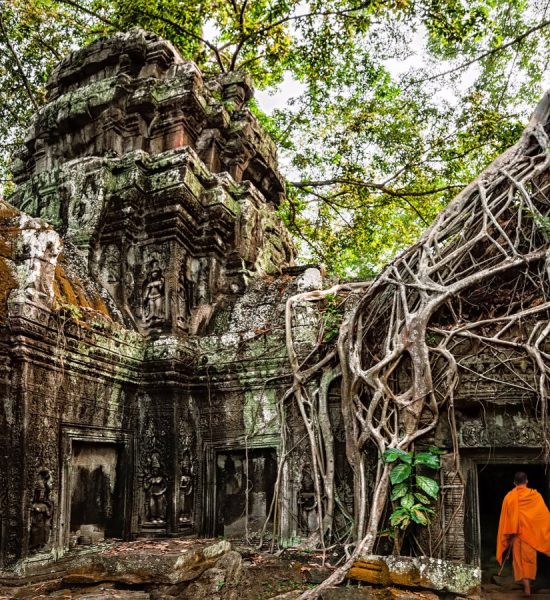
So many things have been said about Ta Prohm temple but this is the comment that best sums it up for me:”If Angkor Wat, the Bayon and other temples are testimony to the genius of the ancient Khmers, Ta Prohm reminds us equally of the aweome fecundity and power of the jungle” (Lonely Planet Cambodia)

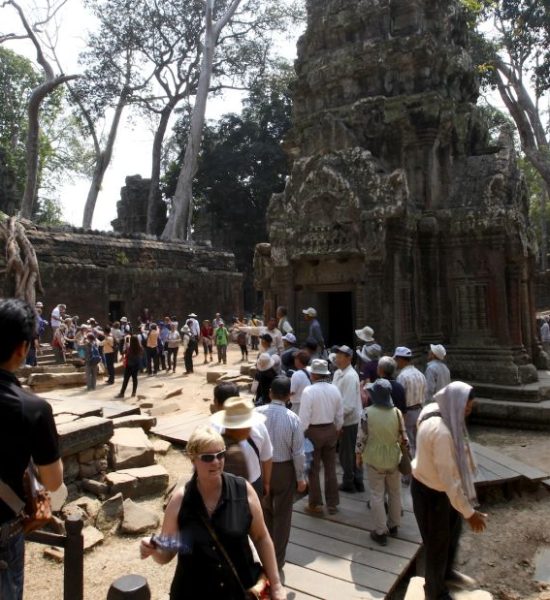
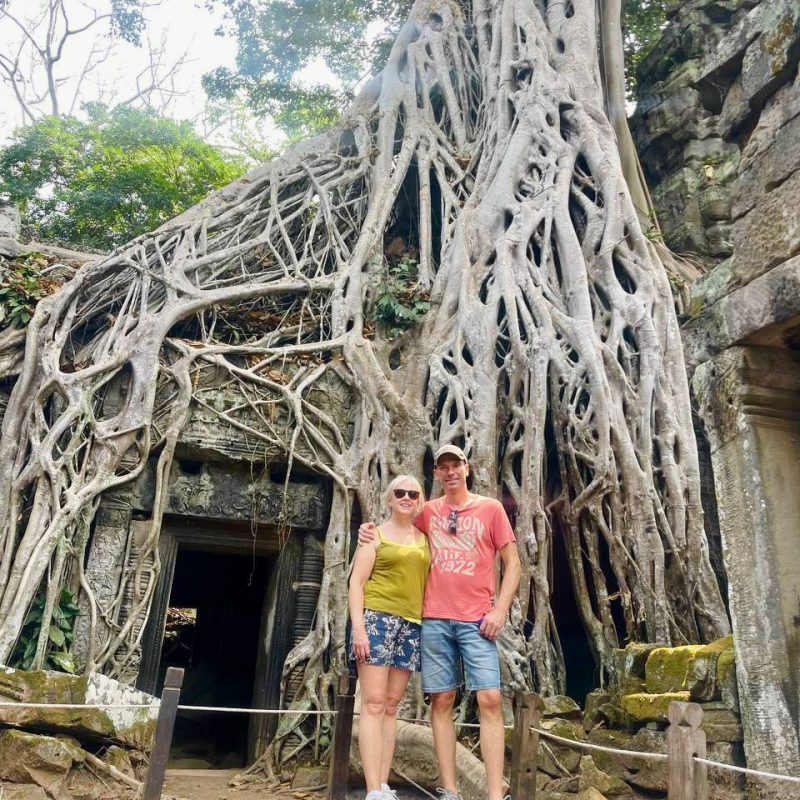
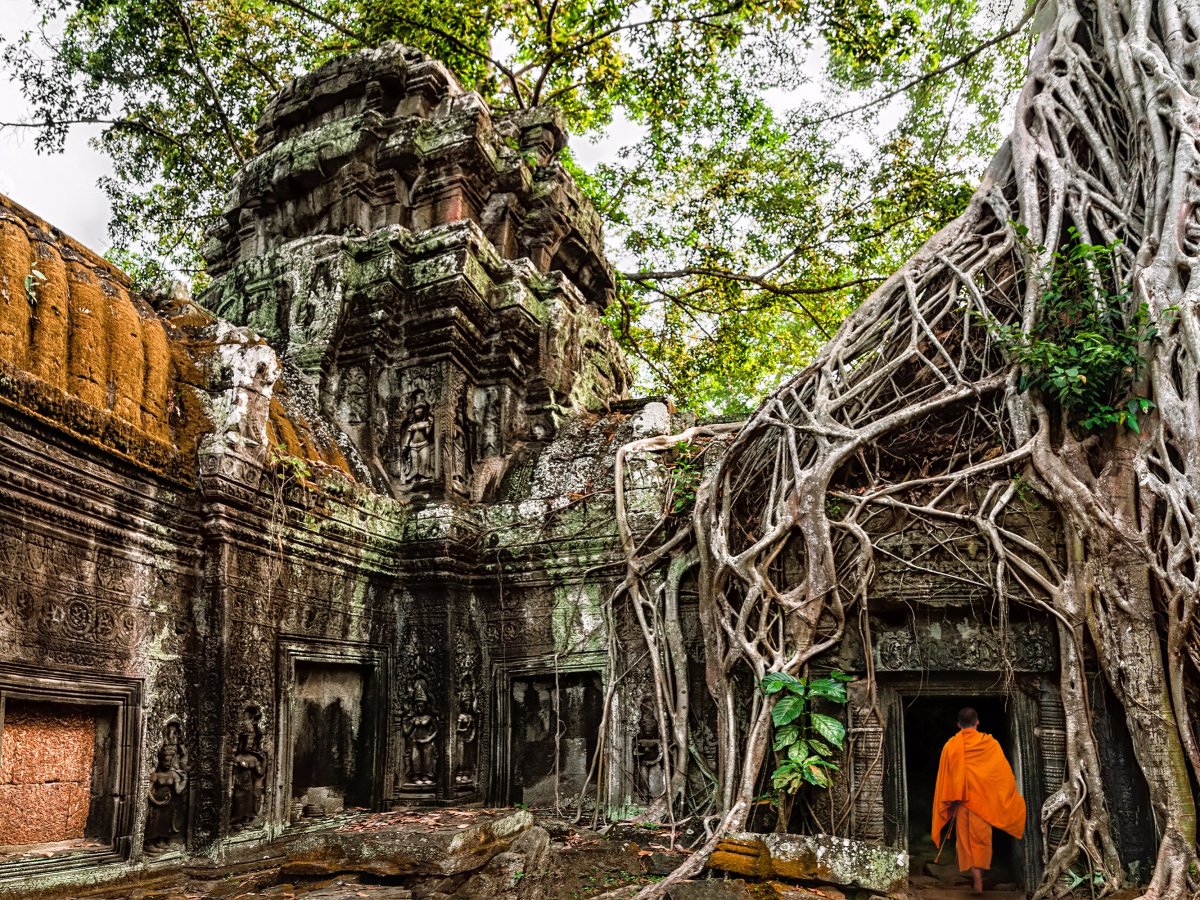
Siem Reap is the northern city home to the Great Angkor Wat Temple, the most popular destination for tourists in Cambodia. People usually know about Angkor Wat and Angkor Thom which are the well known temples rather than the many smaller gorgeous temples around the area. I was particularly impressed by the temple called Ta Prohm or Tree – Strangled Temple. This temple is 800 years old and has lots of enormous beautiful trees, a great example of nature and manmade structure as one. The tree roots twisting around and on top of these temples look like the tentacles of a giant sleeping octopus. This unique appearance of the temple attracts thousands of tourists every year even though the weather isn’t that pleasant throughout the year, averaging 34 degrees. Interesingly, Tom Raider, the 2001 film starring Angelina Jolie helped to spread the world about this amazing feat of architecture.

About a hundred meters walk from the beautiful entrance you can see the first temple with a large front quadrangle surrounded by several tall trees reaching to the sky. Walking through this temple complex is exciting, with trees and roots blending into the temples at every turn. It’s like an enormous sculpture. The camera was working overtime!

Other Attactions

Bayon Temple

Bayon Temple

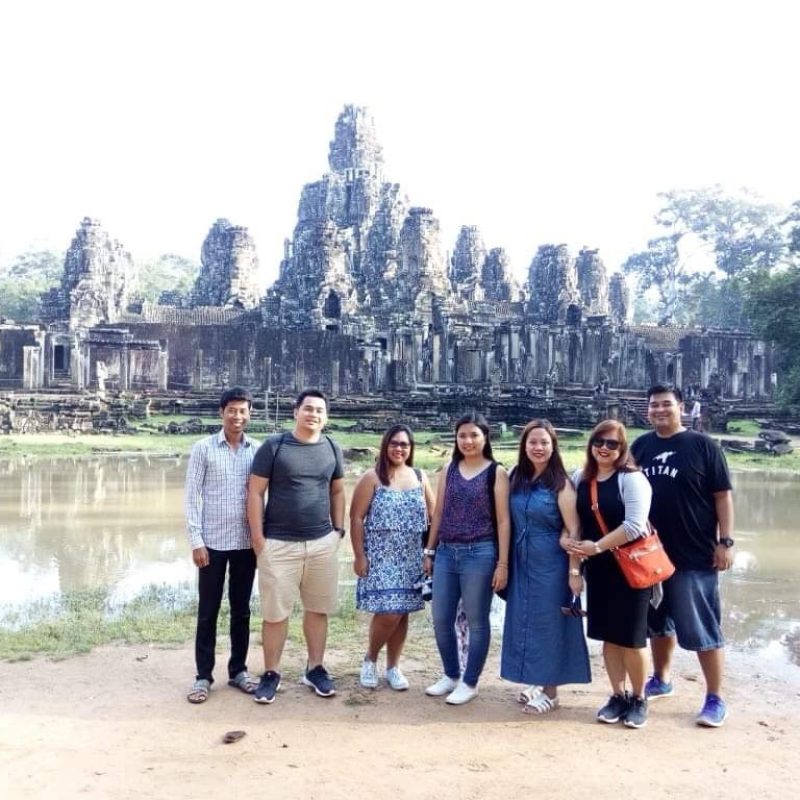
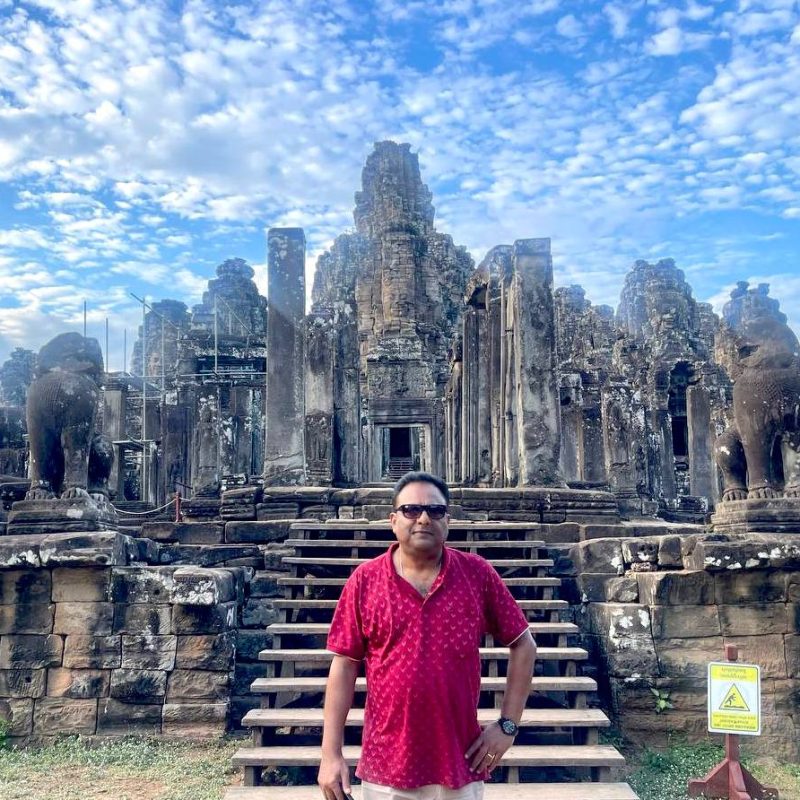
The Bayon Temple or Prasat Bayon is a well-known and richly decorated Khmer temple at Angkor in Cambodia. Built in the late 12th century or early 13th century as the official state temple of the Mahayana Buddhist King Jayavarman VII, the Bayon stands at the centre of Jayavarman’s capital, Angkor Thom. Following Jayavarman’s death, it was modified and augmented by later Hindu and Theravada Buddhist kings in accordance with their own religious preferences.

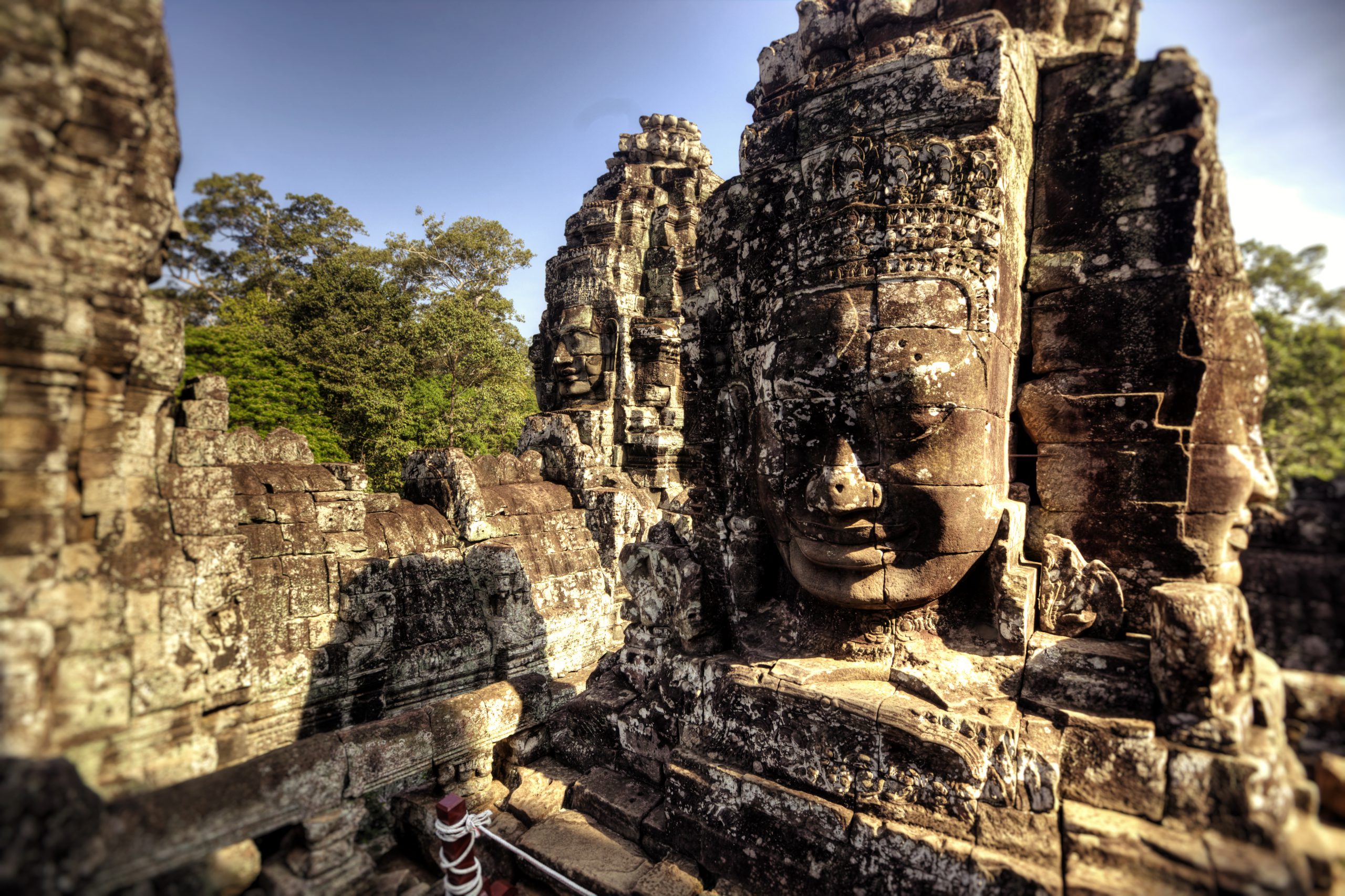
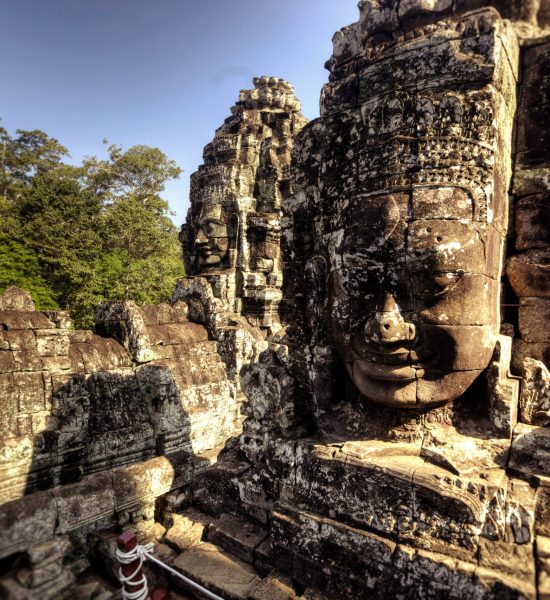
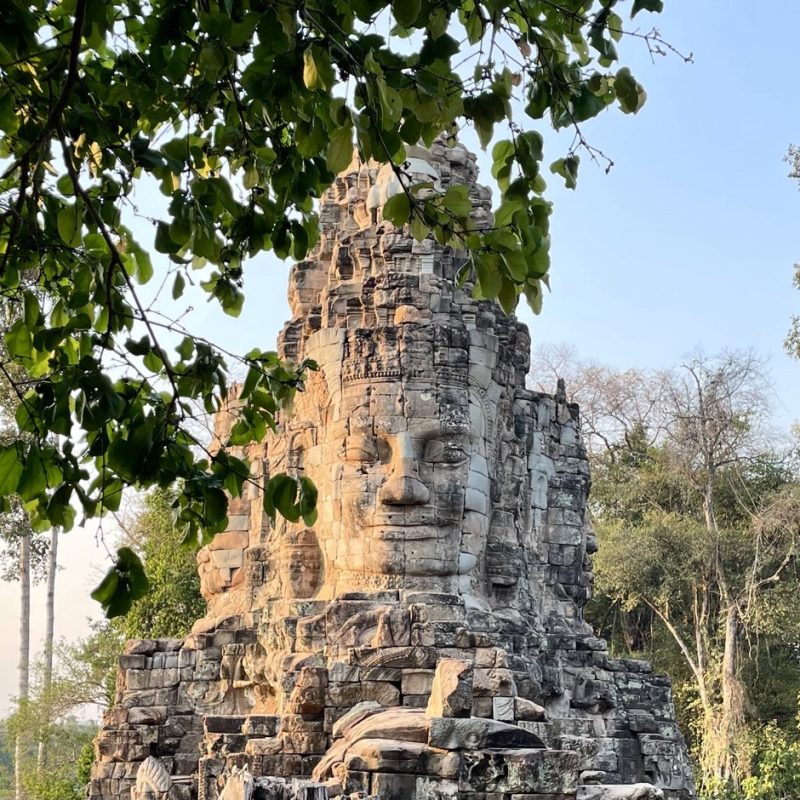
The Bayon’s most distinctive feature is the multitude of serene and massive stone faces on the many towers which jut out from the upper terrace and cluster around its central peak. The temple is known also for two impressive sets of bas-reliefs, which present an unusual combination of mythological, historical, and mundane scenes. The current main conservatory body, the Japanese Government team for the Safeguarding of Angkor (the JSA) has described the temple as “the most striking expression of the baroque style” of Khmer architecture, as contrasted with the classical style of Angkor Wat

History of Bayon Temple

+Buddhist symbolism in the foundation of the temple by King Jayavarman VII

According to scholars, King Jayavarman VII bears a strong resemblance to the face towers of the Bayon. The Bayon was the last state temple to be built at Angkor, and the only Angkorian state temple to be built primarily as a Mahayana Buddhist shrine dedicated to the Buddha, though a great number of minor and local deities were also encompassed as representatives of the various districts and cities of the realm. It was the centrepiece of Jayavarman VII’s massive program of monumental construction and public works, which was also responsible for the walls and nāga-bridges of Angkor Thom and the temples of Preah Khan, Ta Prohm and Banteay Kdei.

The similarity of the 216 gigantic faces on the temple’s towers to other statues of the king has led many scholars to the conclusion that the faces are representations of Jayavarman VII himself. Others have said that the faces belong to the bodhisattva of compassion called Avalokitesvara or Lokesvara. The two hypotheses need not be regarded as mutually exclusive. Angkor scholar George Coedès has theorized that Jayavarman stood squarely in the tradition of the Khmer monarchs in thinking of himself as a “devaraja” (god-king), the salient difference being that while his predecessors were Hindus and regarded themselves as consubstantial with Shiva and his symbol the lingam, Jayavarman as a Buddhist identified himself with the Buddha and the bodhisattva.

+ Alterations following the death of Jayavarman VII

Since the time of Jayavarman VII, the Bayon has suffered numerous additions and alterations at the hands of subsequent monarchs.[1] During the reign of Jayavarman VIII in the mid-13th century, the Khmer empire reverted to Hinduism and its state temple was altered accordingly. In later centuries, Theravada Buddhism became the dominant religion, leading to still further changes, before the temple was eventually abandoned to the jungle. Current features which were not part of the original plan include the terrace to the east of the temple, the libraries, the square corners of the inner gallery, and parts of the upper terrace

+ Modern restoration

In the first part of the 20th century, the École Française d’Extrême Orient took the lead in the conservation of the temple, restoring it in accordance with the technique of anastylosis. Since 1995 the Japanese Government team for the Safeguarding of Angkor (the JSA) has been the main conservatory body, and has held annual symposia.

The site of Bayon Temple

The temple is oriented towards the east, and so its buildings are set back to the west inside enclosures elongated along the east-west axis. Because the temple sits at the exact centre of Angkor Thom, roads lead to it directly from the gates at each of the city’s cardinal points. The temple itself has no wall or moats, these being replaced by those of the city itself: the city-temple arrangement, with an area of 9 square kilometres, is much larger than that of Angkor Wat to the south (2 km²). Within the temple itself, there are two galleried enclosures (the third and second enclosures) and an upper terrace (the first enclosure). All of these elements are crowded against each other with little space between. Unlike Angkor Wat, which impresses with the grand scale of its architecture and open spaces, the Bayon “gives the impression of being compressed within a frame which is too tight for it.”

Angkor Wat Temple Today

The Archaeological Survey of India carried out restoration work on the temple between 1986 and 1992. Since the 1990s, Angkor Wat has seen continued conservation efforts and a massive increase in tourism. The temple is part of the Angkor World Heritage Site, established in 1992, which has provided some funding and has encouraged the Cambodian government to protect the site. The German Apsara Conservation Project (GACP) is working to protect the devatas and other bas-reliefs which decorate the temple from damage. The organisation’s survey found that around 20% of the devatas were in very poor condition, mainly because of natural erosion and deterioration of the stone but in part also due to earlier restoration efforts.

Other work involves the repair of collapsed sections of the structure, and prevention of further collapse: the west facade of the upper level, for example, has been buttressed by scaffolding since 2002, while a Japanese team completed restoration of the north library of the outer enclosure in 2005. World Monuments Fund began work on the Churning of the Sea of Milk Gallery in 2008. Angkor Wat has become a major tourist destination. In 2004 and 2005, government figures suggest that, respectively, 561,000 and 677,000 foreign visitors arrived in Siem Reap province, approximately 50% of all foreign tourists in Cambodia for both years. The site has been managed by the private SOKIMEX group since 1990, which rented it from the Cambodian government.

The influx of tourists has so far caused relatively little damage, other than some graffiti; ropes and wooden steps have been introduced to protect the bas-reliefs and floors, respectively. Tourism has also provided some additional funds for maintenance—as of 2000 approximately 28% of ticket revenues across the whole Angkor site was spent on the temples—although most work is carried out by foreign government-sponsored teams rather than by the Cambodian authorities.

Other Attactions

Angkor Wat Temple

Angkor Wat Temple

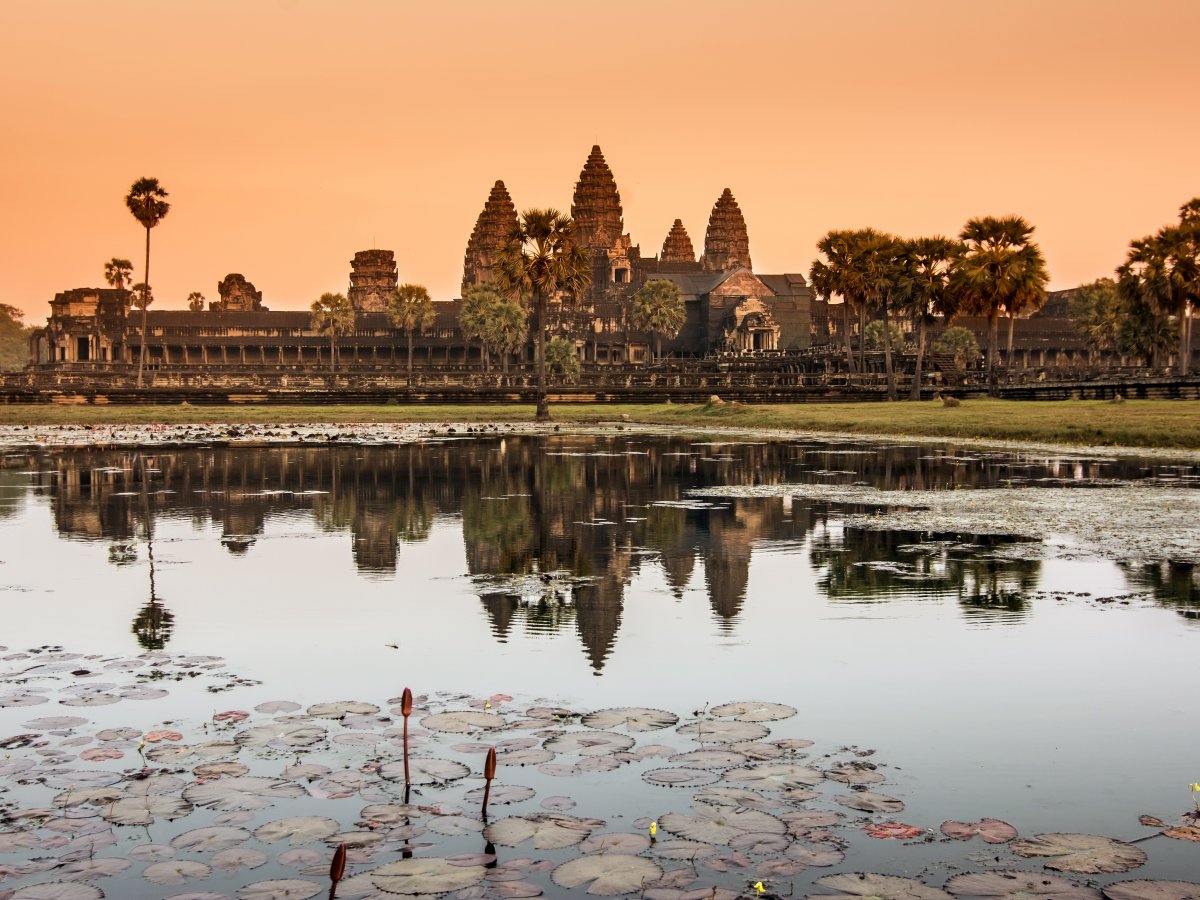
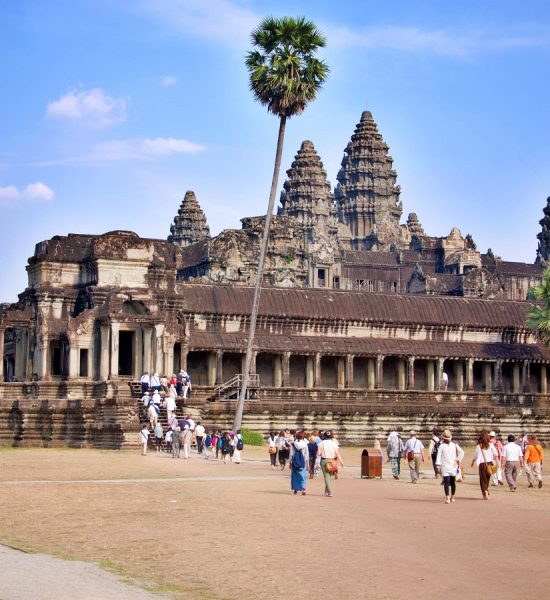
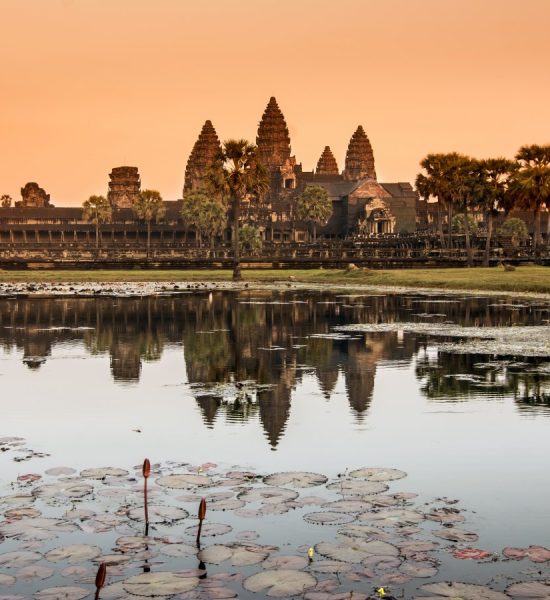
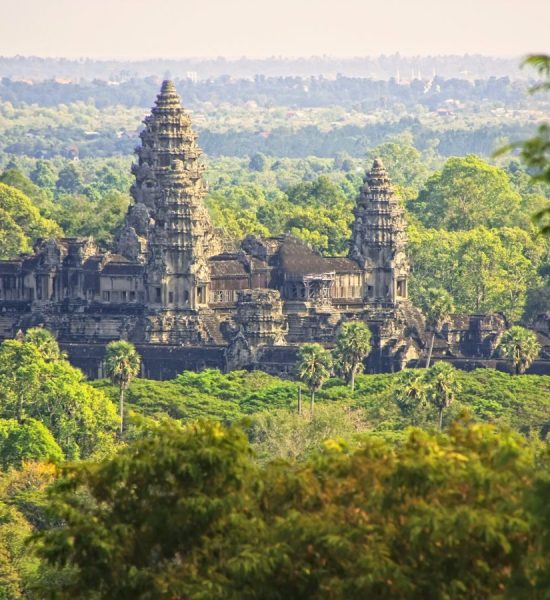
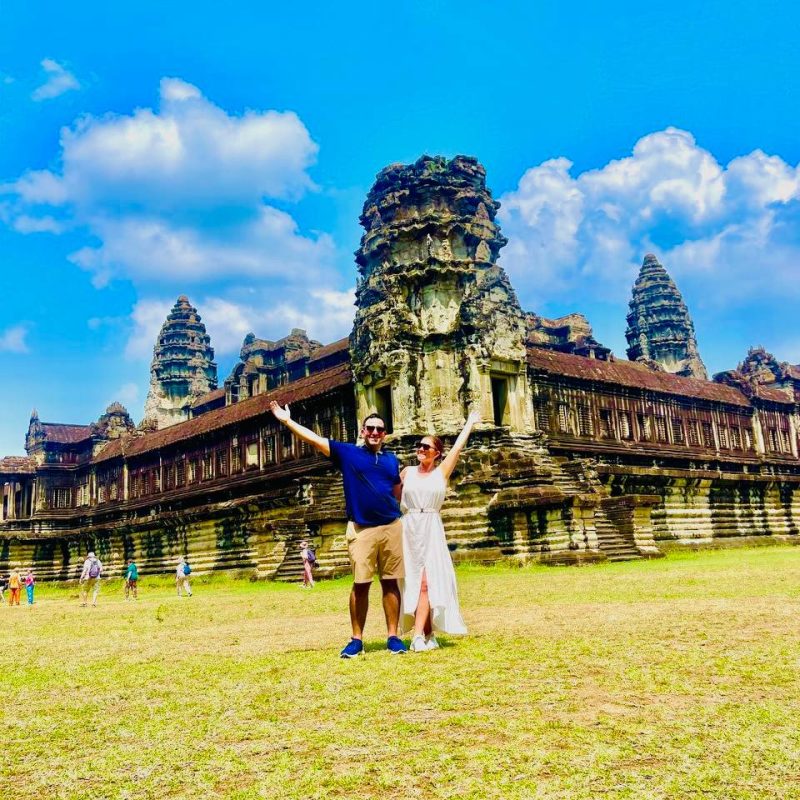
Angkor Wat Temple combines two basic plans of Khmer temple architecture: the temple mountain and the later galleried temple, based on early Indian Hindu architecture, with key features such as the Jagati. It is designed to represent Mount Meru, home of the devas in Hindu mythology: within a moat and an outer wall 3.6 kilometres (2.2 mi) long are three rectangular galleries, each raised above the next. At the centre of the temple stands a quincunx of towers. Unlike most Angkorian temples, Angkor Wat is oriented to the west; scholars are divided as to the significance of this. The temple is admired for the grandeur and harmony of the architecture, its extensive bas-reliefs and for the numerous devatas (guardian spirits) adorning its walls. The modern name, Angkor Wat, means “City Temple”; Angkor is a vernacular form of the word nokor which comes from the Sanskrit word nagara meaning capital or city. Wat is the Khmer word for temple. Prior to this time the temple was known as Preah Pisnulok, after the posthumous title of its founder, Suryavarman II. Angkor Wat is a temple complex at Angkor, Cambodia, built for the king Suryavarman II in the early 12th century as his state temple and capital city. As the best-preserved temple at the site, it is the only one to have remained a significant religious centre since its foundation – first Hindu, dedicated to the god Vishnu, then Buddhist. It is the world’s largest religious building. The temple is at the top of the high classical style of Khmer architecture. It has become a symbol of Cambodia, appearing on its national flag, and it is the country’s prime attraction for visitors.

History of Angkor Wat Temple

Angkor Wat lies 5.5 kilometres (3.4 mi) north of the modern town of Siem Reap, and a short distance south and slightly east of the previous capital, which was centred at Baphuon. It is in an area of Cambodia where there is an important group of ancient structures. It is the southernmost of Angkor’s main sites.

The initial design and construction of the temple took place in the first half of the 12th century, during the reign of Suryavarman II (ruled 1113 – c. 1150). Dedicated to Vishnu, it was built as the king’s state temple and capital city. As neither the foundation stela nor any contemporary inscriptions referring to the temple have been found, its original name is unknown, but it may have been known as Vrah Vishnu-lok ( literally “Holy Vishnu’-Location'”, Old Khmer’ Cl. Sanskrit). after the presiding deity. Work seems to have ended shortly after the king’s death, leaving some of the bas-relief decoration unfinished. In 1177, approximately 27 years after the death of Suryavarman II, Angkor was sacked by the Chams, the traditional enemies of the Khmer. Thereafter the empire was restored by a new king, Jayavarman VII, who established a new capital and state temple (Angkor Thom and the Bayon respectively) a few kilometres to the north.

Henri Mouhot popularised the temple in the west in the mid 19th-century

In the late 13th century, Angkor Wat gradually moved from Hindu to Theravada Buddhist use, which continues to the present day. Angkor Wat is unusual among the Angkor temples in that although it was somewhat neglected after the 16th century it was never completely abandoned, its preservation being due in part to the fact that its moat also provided some protection from encroachment by the jungle.

One of the first Western visitors to the temple was António da Madalena, a Portuguese monk who visited in 1586 and said that it “is of such extraordinary construction that it is not possible to describe it with a pen, particularly since it is like no other building in the world. It has towers and decoration and all the refinements which the human genius can conceive of.” However, the temple was popularised in the West only in the mid-19th century on the publication of Henri Mouhot’s travel notes. The French explorer wrote of it:

Facade of Angkor Wat, a drawing by Henri Mouhot

“One of these temples—a rival to that of Solomon, and erected by some ancient Michelangelo—might take an honourable place beside our most beautiful buildings. It is grander than anything left to us by Greece or Rome, and presents a sad contrast to the state of barbarism in which the nation is now plunged.”

Mouhot, like other early Western visitors, found it difficult to believe that the Khmers could have built the temple, and mistakenly dated it to around the same era as Rome. The true history of Angkor Wat was pieced together only from stylistic and epigraphic evidence accumulated during the subsequent clearing and restoration work carried out across the whole Angkor site.

There were no ordinary dwellings or houses or other signs of settlement including cooking utensils, weapons, or items of clothing usually found at ancient sites. Instead there is the evidence of the monuments themselves.
Style of Angkor Wat Temple

Angkor Wat is the prime example of the classical style of Khmer architecture—the Angkor Wat style—to which it has given its name. By the 12th century Khmer architects had become skilled and confident in the use of sandstone (rather than brick or laterite) as the main building material. Most of the visible areas are of sandstone blocks, while laterite was used for the outer wall and for hidden structural parts. The binding agent used to join the blocks is yet to be identified, although natural resins or slaked lime have been suggested.

Angkor Wat has drawn praise above all for the harmony of its design, which has been compared to the architecture of ancient Greece and Rome. According to Maurice Glaize, a mid-20th-century conservator of Angkor, the temple “attains a classic perfection by the restrained monumentality of its finely balanced elements and the precise arrangement of its proportions. It is a work of power, unity and style.”

Architecturally, the elements characteristic of the style include: the ogival, redented towers shaped like lotus buds; half-galleries to broaden passageways; axial galleries connecting enclosures; and the cruciform terraces which appear along the main axis of the temple. Typical decorative elements are devatas (or apsaras), bas-reliefs, and on pediments extensive garlands and narrative scenes. The statuary of Angkor Wat is considered conservative, being more static and less graceful than earlier work. Other elements of the design have been destroyed by looting and the passage of time, including gilded stucco on the towers, gilding on some figures on the bas-reliefs, and wooden ceiling panels and doors.

The Angkor Wat style was followed by that of the Bayon period, in which quality was often sacrificed to quantity. Other temples in the style are Banteay Samré, Thommanon, Chao Say Tevoda and the early temples of Preah Pithu at Angkor; outside Angkor, Beng Mealea and parts of Phanom Rung and Phimai.

Angkor Wat Temple Today

The Archaeological Survey of India carried out restoration work on the temple between 1986 and 1992. Since the 1990s, Angkor Wat has seen continued conservation efforts and a massive increase in tourism. The temple is part of the Angkor World Heritage Site, established in 1992, which has provided some funding and has encouraged the Cambodian government to protect the site. The German Apsara Conservation Project (GACP) is working to protect the devatas and other bas-reliefs which decorate the temple from damage. The organisation’s survey found that around 20% of the devatas were in very poor condition, mainly because of natural erosion and deterioration of the stone but in part also due to earlier restoration efforts.

Other work involves the repair of collapsed sections of the structure, and prevention of further collapse: the west facade of the upper level, for example, has been buttressed by scaffolding since 2002, while a Japanese team completed restoration of the north library of the outer enclosure in 2005. World Monuments Fund began work on the Churning of the Sea of Milk Gallery in 2008. Angkor Wat has become a major tourist destination. In 2004 and 2005, government figures suggest that, respectively, 561,000 and 677,000 foreign visitors arrived in Siem Reap province, approximately 50% of all foreign tourists in Cambodia for both years. The site has been managed by the private SOKIMEX group since 1990, which rented it from the Cambodian government.

The influx of tourists has so far caused relatively little damage, other than some graffiti; ropes and wooden steps have been introduced to protect the bas-reliefs and floors, respectively. Tourism has also provided some additional funds for maintenance—as of 2000 approximately 28% of ticket revenues across the whole Angkor site was spent on the temples—although most work is carried out by foreign government-sponsored teams rather than by the Cambodian authorities.

Other Attactions

Angkor Wat One Day​ Tour

Angkor Wat One Day​ Tour

Angkor Wat One Day Tour With Sunrise Or Sunset

Overview

The tour is special made for a short day excursion in Siem Reap, the gateway to Angkor temple. Experience the most highlights of Angkor era ancient treasure of Angkor complex admires the great architecture of Angkor city intricate carving that amazed.

Highlight

Itinerary

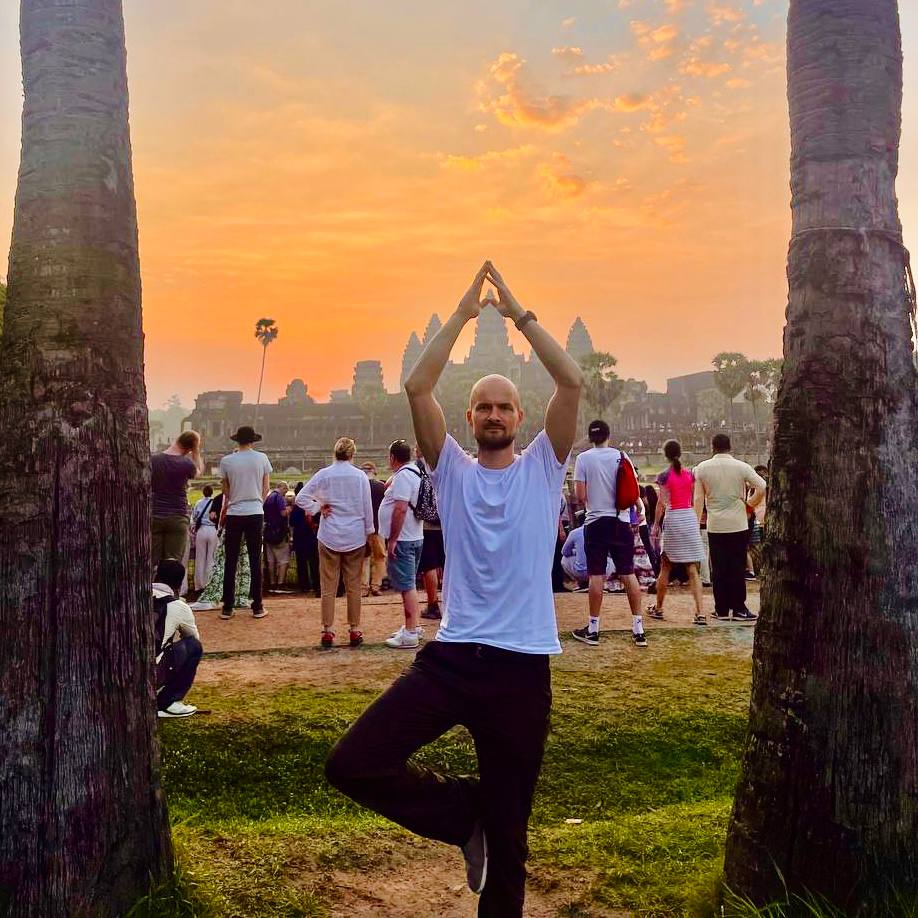
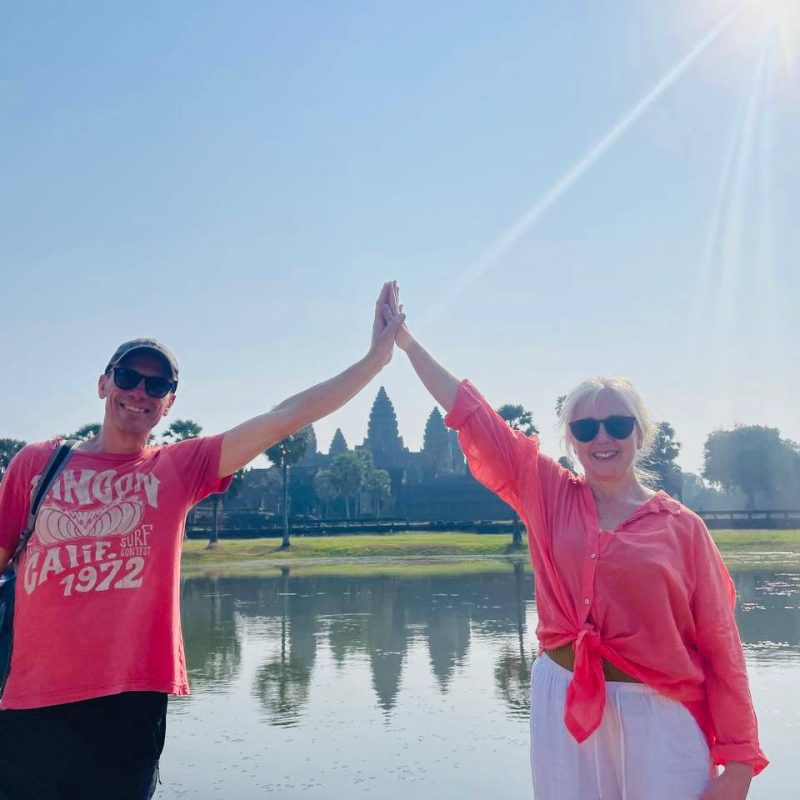
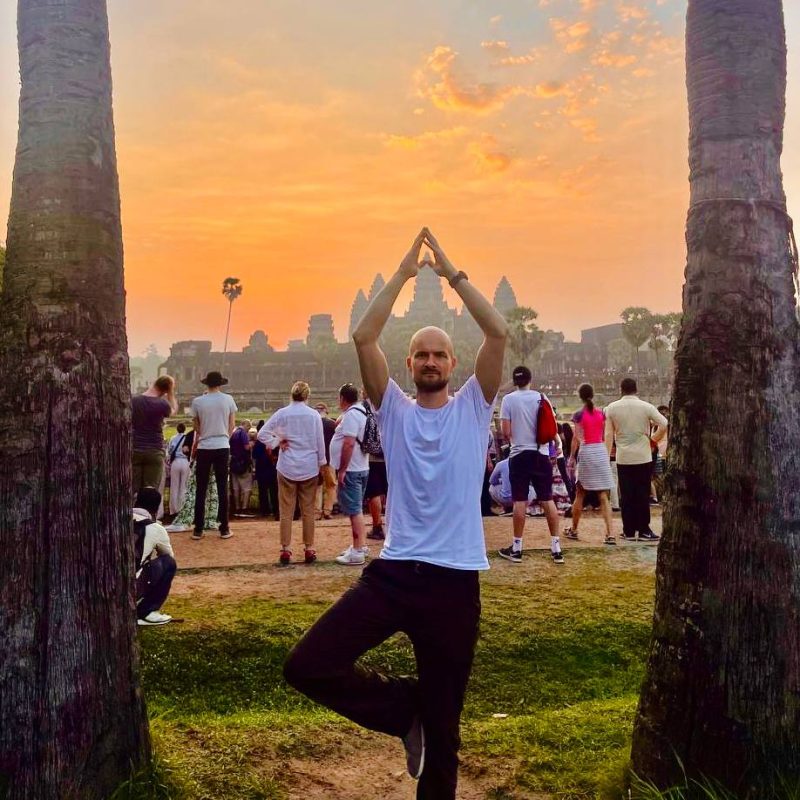
Early morning leaving from the hotel for a sunrise at pre-dawn to witness the breathtaking views of Angkor Wat temple, the best place photography. Continue to explore the central complex and its beautiful bad-reliefs of Angkor Wat (AD 1113), one of travel’s remaining great adventures.

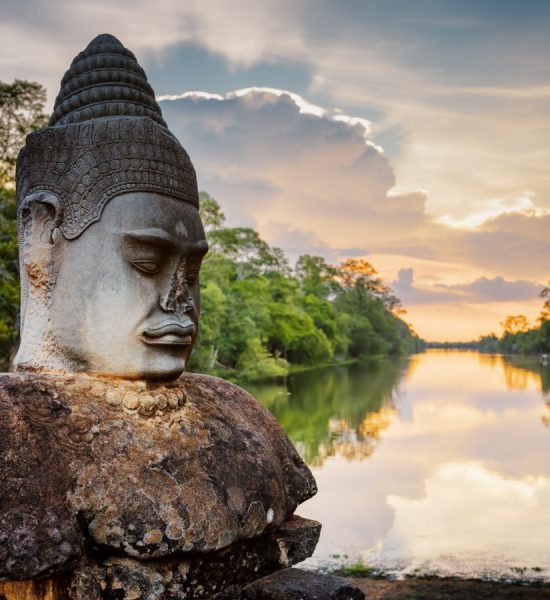
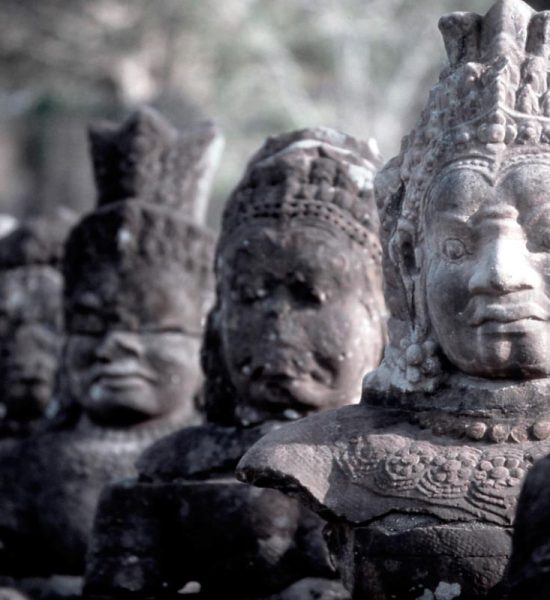
Continue to explore by entering from South Gate of Angkor Thom, the most famous city gate and kind of emblem of Angkor Thom. Every visitors of Angkor will see it. En route to Bayon ( Jayavarman state temple ) at the center of city with many captivating giant stone faces. Your guide will point out the most important detailed bas-reliefs illustrating everyday life in the Angkor ear. And will begin again atmospheric Baphuon, north-west of Bayon, also called “golden mountain “ Phimeanakas ( Royal Palace area ) with its beautiful lakes behind elephant terrace and finally reach to the terrace of the leper king we stop by briefly to see an imposing statue found in Bayon temple which is currently displayed at Vihea Prampeilveng. We will bring you through by victory gate, out of Angkor Thom to have lunch at local restaurant ( own cost ) a wide selection of excellent eateries can be recommended to suit all tastes and budget.

After lunch break we will you go to Ta Nie, built under Javamarn Vll, this Buddhist temple hidden deep in forest with all charm romantic ruins.
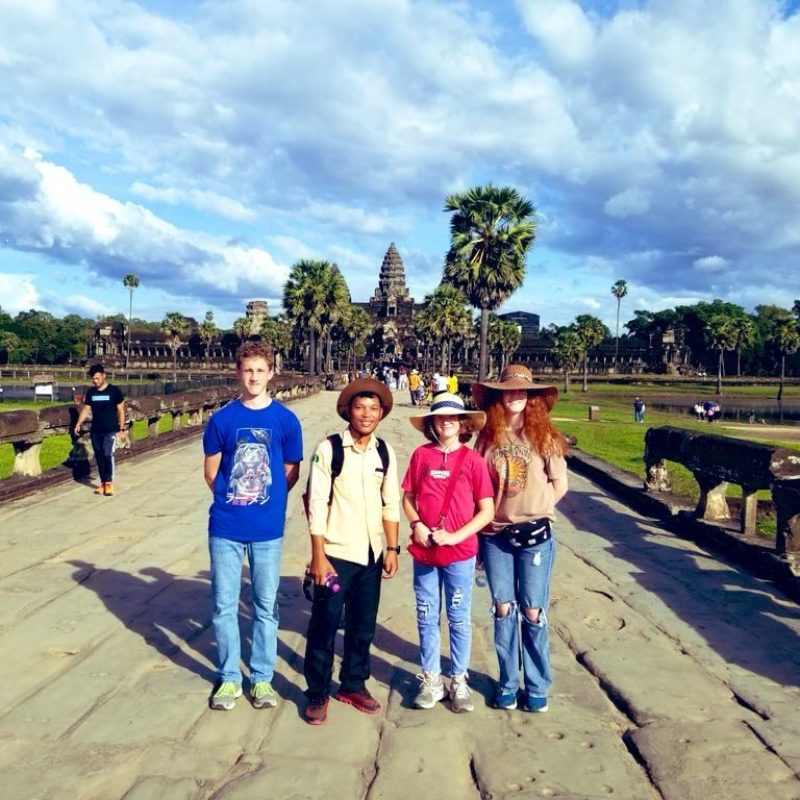
The last stop of the tour Ta Prohm. One of the most famous spots in Ta Prom is the so-called Tomb Raider tree.

NOTE: Later morning pick up from hotel for sunset Angkor Wat tour option.

Tour Included

Tour Excluded

Other similar tours

Visit Local Travel